Custom SaaS development for products built around your advantage
Custom SaaS development turns a specific idea, workflow or area of industry expertise into software that customers can access online and pay to use over time. Unlike a ready-made platform, a custom SaaS product is designed around your users, your business model and the problem that makes your company different.
Deepsel designs, builds, launches and supports custom SaaS products for startups and small businesses. You work with a senior team, see working software every two weeks and own the source code, repositories and cloud accounts from the first commit.
Have a SaaS product in mind? Book a free 30-minute call to discuss what you want to build, what you have already tested and the smallest sensible next step.


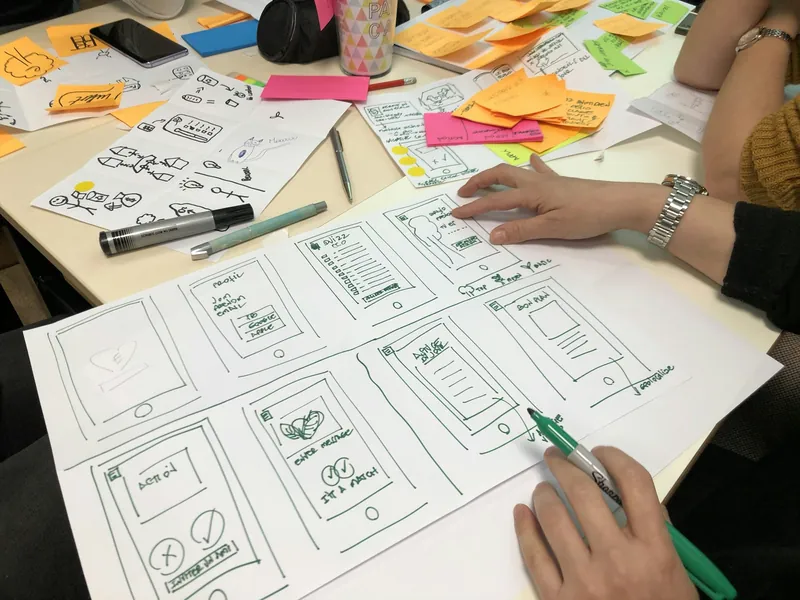
The result should be more than a web application with a subscription attached.
- Secure customer accounts
- Separated data
- Roles and permissions
- Billing
- Plan limits
- Administration
- Monitoring
- A practical way to release improvements without disrupting users
Our clients
Public and private organizations across the United States and Europe, from startups to government agencies.




What is custom SaaS development?
Custom SaaS development is the process of creating cloud-based software for a particular market, customer group or business workflow. Users access the product through a browser or app, while the provider operates one evolving service and typically charges through subscriptions, usage-based pricing or a combination of both.
The word “custom” matters.
Instead of adapting your business to the limits of an existing product, you define how the software works:
- Which problem the product solves
- Who can create an account or organization
- What each user role can see and do
- How customer data is separated
- Which features belong to each pricing plan
- How subscriptions, trials, upgrades and cancellations work
- Which external services the product connects to
- How the product will be monitored, supported and improved
That flexibility creates an opportunity to build a genuine competitive advantage.
It also creates responsibility. Decisions about the product, business model and technical architecture need to support one another from the beginning.
Custom SaaS versus off-the-shelf software
Buying an existing SaaS tool is often the right decision. If a proven product already handles the workflow well and the software itself will not differentiate your business, subscribing is usually faster, cheaper and less risky than building.
Custom development becomes more compelling when your workflow, customer experience or data is part of the advantage you intend to own.
| Choose an existing SaaS product when… | Consider custom SaaS development when… |
|---|---|
| Existing productYour requirements are standard for the industry | Custom SaaSGeneric tools miss an important part of your workflow |
| Existing productYou need a solution immediately | Custom SaaSYou can launch in stages and learn from early users |
| Existing productThe available integrations cover your needs | Custom SaaSYour product depends on unusual systems or data flows |
| Existing productYour team can adapt its process to the software | Custom SaaSThe process itself is a source of efficiency or differentiation |
| Existing productPer-user fees remain reasonable as you grow | Custom SaaSLicense costs or platform constraints become limiting at scale |
| Existing productOwning the product and roadmap is not important | Custom SaaSYou need control over the roadmap, user experience and intellectual property |
There is also a useful middle ground.
A custom SaaS product does not need to recreate authentication, payments, email delivery, cloud hosting or analytics from scratch. A good development team builds the parts that create your advantage and integrates reliable services for the rest.
- Authentication
- Payments
- Email delivery
- Cloud hosting
- Analytics
When a custom SaaS product is the right investment
The best custom SaaS ideas usually begin with evidence, not a feature list.
That evidence may be
- Paying customers
- A service delivered manually
- A spreadsheet that has become operationally critical
- Repeated complaints about the same gap in existing software
-
You already deliver the service manually
Your team may coordinate work through spreadsheets, email, forms and several disconnected tools. Customers are paying, but every new account creates more administrative work. A custom SaaS platform can turn that proven service into a consistent self-service experience and help revenue grow without matching it with the same growth in manual effort.
-
You understand a niche that general-purpose tools overlook
Deep industry knowledge is a strong foundation for a vertical SaaS product. You know the exceptions, approvals, terminology and handoffs that outsiders miss. Custom software can encode that knowledge into a focused workflow customers are willing to pay for.
-
You have validated an idea with a prototype
A prototype built in Figma, Lovable, Replit, Bolt or Cursor can prove that people understand the concept. The next step is often to turn it into production software with secure accounts, a reliable data model, billing, tests, monitoring and maintainable code.
Software project rescue → -
An internal platform could become a product
Some SaaS businesses start with software built to solve their own problem. If partners or companies in the same industry need the same capability, the internal tool may have product potential. The main challenge is redesigning it for multiple independent customers rather than simply exposing the original system.
-
Existing software is limiting growth
You may have outgrown a no-code platform, inherited a fragile codebase or reached the limits of a first release. Custom SaaS development can also mean modernizing the product in stages, improving the architecture or rescuing a build that cannot support the next group of customers.
Real projects we've shipped
From the Swiss federal login system to consumer apps, marketplaces and company websites: designed, built and run in production by this team.
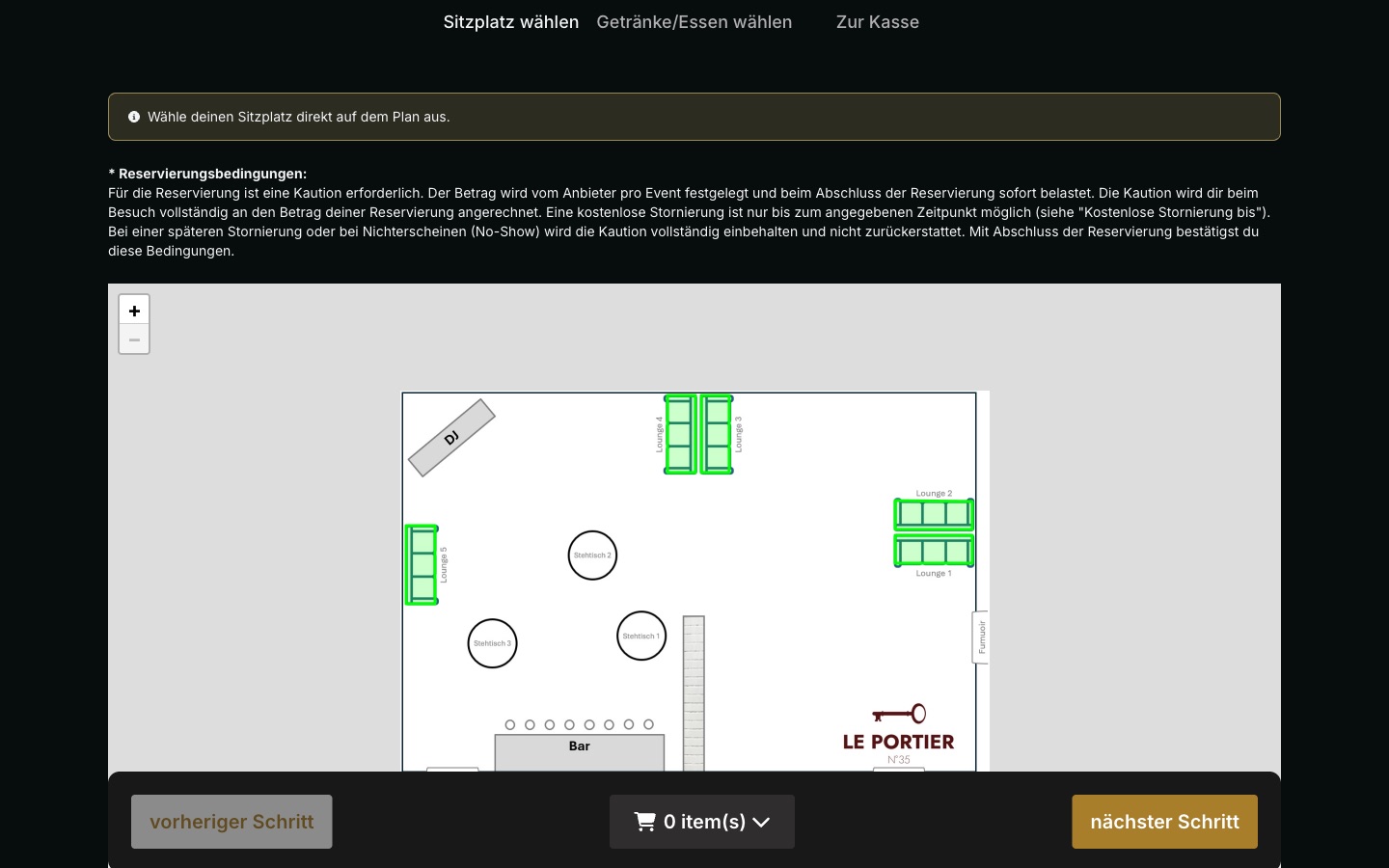
Clubloungery
Booking.com for nightclubs. Guests pick a lounge directly on the floorplan and reserve in a few clicks; club owners draw their own bookable areas.
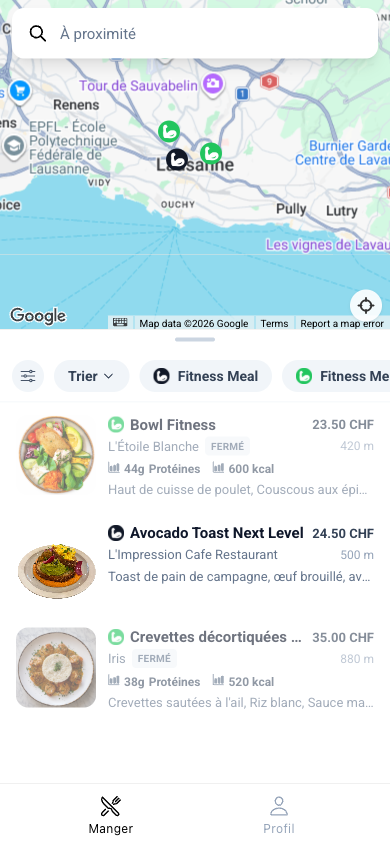
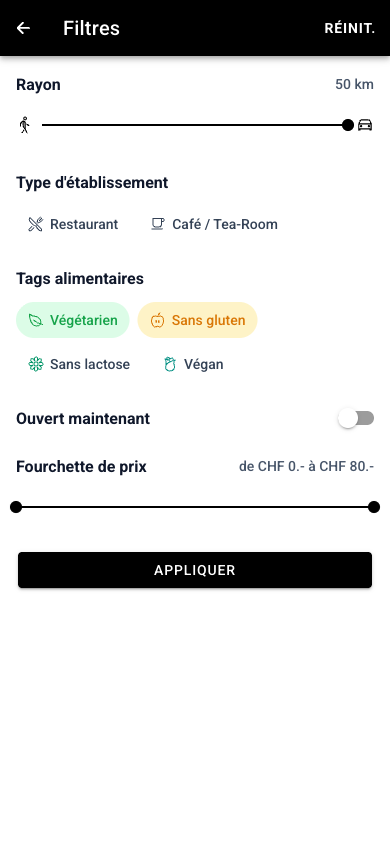
FitFoodies
An app to find healthy food around you: fitness-friendly dishes from nearby restaurants on a live map, filtered by dietary tags and nutrition values.
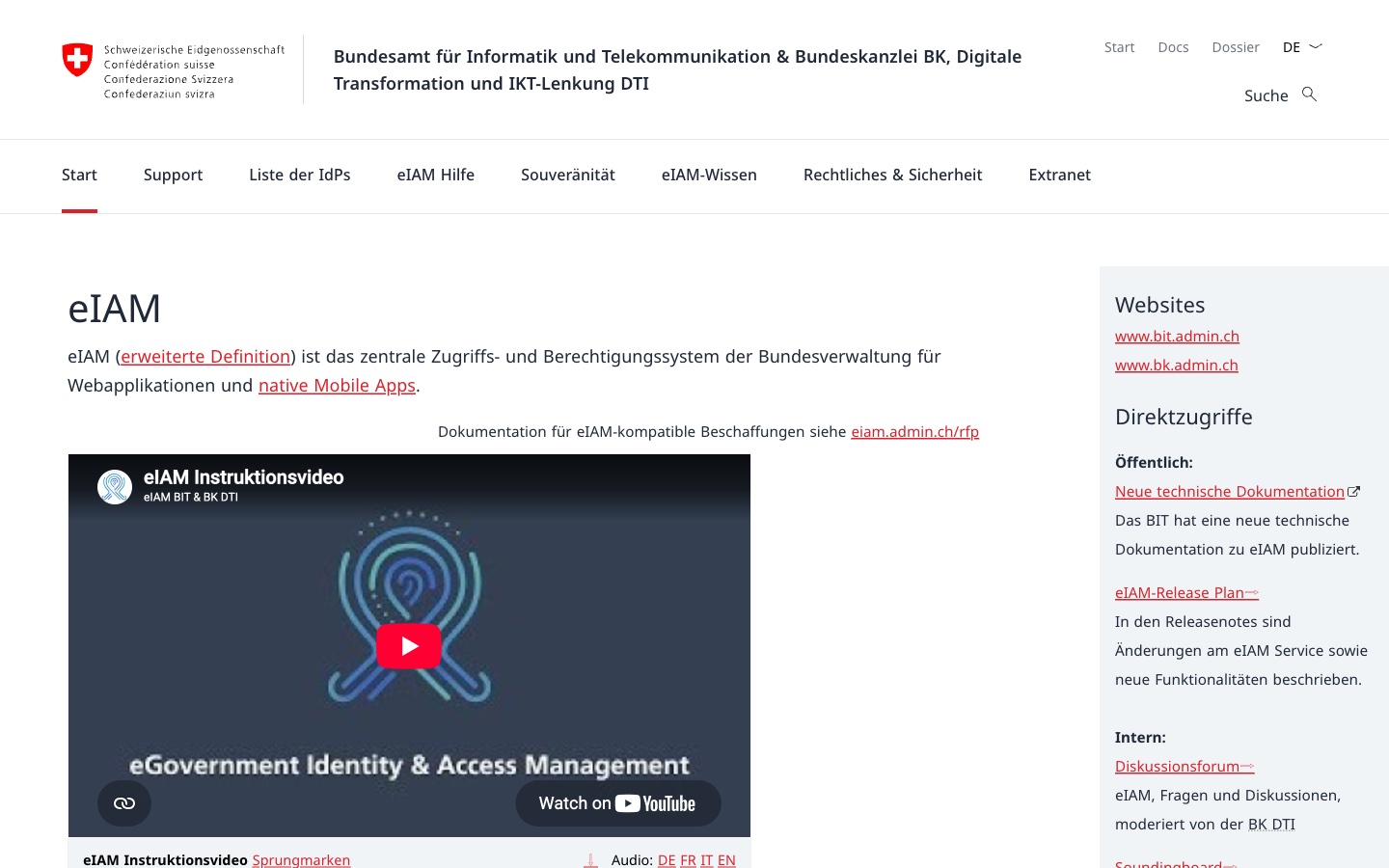
eIAM
The central login of the Swiss federal administration. We replaced the entire front end while the system stayed live, without touching the backend.
Result: Zero downtime during switchover
What a complete custom SaaS product needs
The feature customers come to use is the center of the product, but it is not the whole product. SaaS development also requires a control layer that manages who each customer is, what they can access, what they pay for and what happens when something goes wrong.
One valuable core workflow
The first release should solve one meaningful problem from beginning to end. A focused workflow is more valuable than a large collection of unfinished features. It also makes the initial product easier to explain, test, price and improve.
For example, the core workflow might let:
- A property managerinspects a building
- A cliniccoordinates referrals
- A logistics companyprices a shipment
- A professional-services firmdelivers a repeatable client process
The specific workflow is where domain knowledge becomes product value.
The control layer around it
-
Accounts and tenant isolation
Most B2B SaaS products serve organizations, not just individual users. Each customer needs an account or tenant, and its data must remain separate from every other customer’s data.
That boundary should be designed into the data model and tested at every access point. Retrofitting tenant isolation after launch is expensive and risky, which is why it belongs in the architecture from the start.
-
Roles and permissions
An owner, administrator, manager, employee and outside collaborator should not automatically have the same access. Role-based permissions define who can view, create, approve, export or delete information.
The first release does not need a complicated permission builder. It does need a clear model that supports the real decisions users make and can expand without being rebuilt.
One example permission model View Create Approve Export Delete Owner Allowed Allowed Allowed Allowed Allowed Administrator Allowed Allowed Allowed Allowed Not allowed Manager Allowed Allowed Allowed Not allowed Not allowed Employee Allowed Allowed Not allowed Not allowed Not allowed Outside collaborator Allowed Not allowed Not allowed Not allowed Not allowed -
Subscription billing and entitlements
Collecting a payment is only the visible part of SaaS billing. The product also needs to understand trials, plans, renewals, upgrades, downgrades, failed payments, cancellations, taxes where applicable and the features or usage included in each plan.
Billing logic should match the commercial model. If plans are defined only on a pricing page but not enforced consistently in the product, support problems and revenue leakage follow.
-
Onboarding and activation
A customer should be able to reach the first useful result without a developer guiding every step. That may require an onboarding checklist, sample data, invitations, imports, configuration or a short guided flow.
The goal is not to add more screens. It is to reduce the distance between sign-up and the moment a customer understands why the product is valuable.
-
Administration and support tools
Your team needs a safe way to manage customers, plans, access, support requests and exceptional cases. A practical admin area often saves more operating time than another customer-facing feature.
These tools should make support possible without giving staff unrestricted access or requiring engineers to edit the database by hand.
-
Integrations and APIs
Many SaaS products become useful only when they fit into an existing workflow. That can mean connecting to accounting software, CRMs, payment providers, messaging tools, identity systems, industry databases or customer-owned systems.
Every integration adds external rules, failure modes and maintenance. Prioritize integrations that are necessary to complete the core workflow or close early customers, then add others as real demand appears.
-
Security, monitoring and recovery
Security is not a feature to add immediately before launch. A production SaaS product needs secure authentication, controlled access, encrypted connections, protected secrets, dependency management, backups, logs and a recovery plan appropriate to the risk.
Monitoring should answer practical questions:
- Is the product available?
- Are background jobs running?
- Are payments and emails succeeding?
- Did a release increase errors?
- Can the team identify the affected customer quickly?
For the three common tenancy models and how billing events connect to product access, see our SaaS product development page.
The business benefits of custom SaaS development
-
You own the product roadmap
You decide which users to serve, which problems to solve and what to build next. The roadmap can follow customer evidence and business strategy instead of the priorities of a third-party platform.
-
The product fits the workflow
Customers do not need to assemble five tools or change a valuable process to accommodate generic software. A focused product can remove unnecessary steps, automate handoffs and create a clearer experience.
-
Software can become a repeatable revenue stream
Turning a proven service into a product can make delivery more consistent and less dependent on manual work. Subscription or usage revenue may also become more predictable as the customer base grows.
-
Your data and integrations become more useful
A custom platform can connect information that is currently fragmented, validate it as it enters the system and present it in the context where users make decisions.
-
You keep control of the intellectual property
Ownership matters when software is central to the company’s value. The development agreement should state who owns the source code, designs, infrastructure and related work, and the product should live in accounts your company controls.
A practical custom SaaS development process
The process should reduce uncertainty before the team spends heavily, then make progress visible throughout the build.
-
Validate the problem and define the first customer
Start with the customer, the problem and the outcome—not a long feature backlog. Existing interviews, paid pilots, manual delivery, prototypes and usage data are more useful than assumptions.
The first release should answer a commercial question.
The commercial questionWill this user complete this workflow, receive enough value and pay for the result?
-
Scope the smallest credible release
A credible SaaS MVP is smaller than the final vision but complete enough for a real customer to use. It normally includes the core workflow and the essential SaaS machinery around it. Features that do not help prove demand, deliver value or operate the product safely can wait.
A written scope should identify- What is included
- What is excluded
- Key assumptions
- Acceptance criteria
- Dependencies
- Decisions that could change the estimate
-
Design the user experience and system together
Screens, data and architecture affect one another. Designing them together exposes gaps early: missing states, unclear permissions, manual exceptions, billing rules or data that the product cannot obtain.
The output should be enough for everyone to understand what will be built and how the important parts fit together before full implementation begins.
-
Build in working increments
Short delivery cycles let you inspect real behavior instead of reading status reports. Each demonstration should show working software in an environment you can access. Feedback is then based on what the product does, not on how each person interpreted the brief.
-
Test the boundaries, not only the happy path
Testing should cover the core workflow, permissions, tenant boundaries, billing events, integrations and failure cases. Automated tests protect the most important behavior as the product changes, while manual product testing catches confusing experiences that code-level tests cannot see.
-
Launch in stages
A staged launch limits risk and creates room to learn. Start with internal users or a small customer group, monitor behavior and support requests, fix the important issues, then expand access. Every launch should include backups, monitoring and a rollback plan.
-
Improve the product from evidence
After launch, prioritize work using customer behavior, support conversations, retention, conversion and operational cost. A roadmap based on evidence prevents the product from becoming a collection of requests from the loudest user.
From the first call to a product in production
Five steps, each with something in writing at the end of it.
-
Discovery call
Thirty minutes on what you are building, who it is for and what already exists. We say what we think, including when the right answer is a smaller build.
-
Scope and estimate
We map users, workflows, integrations and risks, then put the scope, architecture, timeline and estimate in writing. It is yours to keep, whoever builds it.
-
Design
Screens and data model drawn together, so what you approve is what gets built.
-
Build and test
Two-week increments, each ending in a version you can click through. Automated tests, code review and load checks before launch.
-
Launch and support
A staged rollout with a rollback plan, documentation and a handover session. Then we maintain the product, or hand it to your team.
How to choose a custom SaaS development company
A persuasive proposal is not necessarily the longest proposal or the biggest team. Look for a partner that understands the customer-facing product and the operational system behind it.
Ask these questions before you sign:
-
What will the first release prove?
The answer should name a user, a valuable workflow and an observable outcome.
-
How will customer data be isolated?
The team should explain the tenancy model and its tradeoffs in plain language.
-
Are billing, roles, admin tools and deployment included?
These are often implied by “SaaS MVP” but missing from the estimate.
-
Who makes the technical decisions?
Find out whether the senior person in discovery remains accountable during delivery.
-
How often will we see working software?
Frequent demonstrations expose misunderstandings while they are still inexpensive to correct.
-
Who owns the code and infrastructure?
The contract and delivery setup should make ownership unambiguous.
-
What happens after launch?
Clarify support, monitoring, maintenance, response expectations and the path to a different team if needed.
A trustworthy partner should also say when an off-the-shelf product, a manual test or a smaller build is the better next step.
For a longer checklist that applies to any software project, read how to choose the right software development company.
Why clients choose us
Senior engineers from start to finish
The people on the discovery call are the people who write the code. Nothing is sold by one team and built by another.
Built for production, not for the demo
Every release is tested, monitored and documented before it reaches users. That holds for a first MVP and for a federal login system alike.
Your code, in your accounts
Repositories, cloud accounts and documentation belong to you from the first day. Leaving is a decision, not a migration project.
Small on purpose
A compact senior team and a short client list, so every project gets the founder's attention and nothing waits in a queue.
Common custom SaaS development risks—and how to reduce them
-
Building too much before customers use it
Large first releases feel comprehensive but delay the feedback that matters.
How to reduce itSet one release goal, identify the smallest end-to-end workflow that achieves it and move everything else to a later decision.
-
Treating SaaS infrastructure as an afterthought
Accounts, tenant isolation, permissions, billing and administration may not appear in the product pitch, but customers depend on them.
How to reduce itInclude them explicitly in the scope and estimate.
-
Choosing architecture for imagined scale
Premature complexity slows delivery and raises maintenance costs.
How to reduce itDesign for the next credible stage of growth, keep boundaries clean and document the signals that would justify a more complex architecture later.
-
Letting one customer turn into a separate product
Early customers often ask for exceptions.
How to reduce itPrefer configuration that keeps one maintainable product over custom branches for individual accounts. Accept special work only when its revenue and strategic value justify the ongoing cost.
-
Measuring progress by activity
Hours, tickets and meetings do not prove that the product is becoming useful.
How to reduce itReview working software, release outcomes, defects and customer behavior instead.
-
Losing control of the product
How to reduce itKeep repositories, cloud accounts, domains, payment systems and critical third-party services under company ownership. Require documentation and avoid proprietary dependencies that make a future handover impractical.
Technology choices for a custom SaaS platform
There is no universally best SaaS technology stack. The right choices depend on the product, the team that will maintain it, integration requirements, security expectations and the scale the business can credibly reach.
For most first releases, proven and widely supported technologies are preferable to novel infrastructure. A conventional architecture is easier to hire for, operate and hand over. Managed cloud services can reduce operational work, while modular design leaves room to separate high-load or high-risk components later.
The important questions are not whether the stack is fashionable, but whether it:
- Supports secure tenant isolation and access control
- Can be tested and deployed reliably
- Has mature libraries for required integrations
- Is observable when failures occur
- Can be maintained by more than one specialist
- Fits the expected usage and budget
- Gives the business a practical path to future releases
Technologies we work with
We pick the stack for the product and for the team that will maintain it after us.
 React
 Next.js
 Vue
 TypeScript
 Astro
 Tailwind CSS
 Node.js
 Python
 FastAPI
 Django
 PostgreSQL
 MongoDB
 Redis
 Docker
 Kubernetes
 AWS
 Google Cloud
 Flutter
 Swift
 Kotlin
How long does custom SaaS development take?
A focused first version can often be designed and built in one to three months. The schedule grows with the number of workflows, user types, integrations, migration requirements, compliance controls and unknowns in the scope.
Deepsel typically ships a startup MVP in one to two months. Working software is demonstrated every two weeks so decisions can be made while the build is still moving.
-
A focused first versionOne to three months
-
A Deepsel startup MVPOne to two months
-
Working software demonstratedEvery two weeks
These factors commonly extend a timeline:
- Several distinct user groups with different workflows
- Complex permissions or approval chains
- Data migration from an existing system
- Unreliable or poorly documented third-party integrations
- Mobile applications in addition to the web product
- Enterprise requirements such as SSO, audit logs or dedicated environments
- Regulatory or contractual security requirements
- A first release that attempts to serve several markets at once
The most reliable timeline comes from a written scope and architecture, not a feature count on a sales call.
What our clients say
Three clients on what it was like to work with us.
“We have worked with Deepsel on many projects over the years. Really easy to work with, fast delivery, proactive problem solver that helps advance projects with creative ideas.”

“Tim did an excellent job in building an app to automate multiple workflows for my van rental business monkeyrent.ch. Thanks to him, I save hours of work every day.”

“Tim is incredibly fast and efficient. I won't hesitate to work with him again in the future.”

How much does custom SaaS development cost?
Custom SaaS development costs vary widely because “SaaS product” can describe anything from one paid workflow to an enterprise platform with many user types, integrations and compliance requirements.
Published agency estimates commonly place a focused first version between $30,000 and $150,000, while full platforms can reach $100,000 to $500,000 or more.
-
Focused first versionPublished agency estimates
Range: $30,000–$150,000 -
Full platformPublished agency estimates
Range: $100,000–$500,000 or more -
Deepsel startup SaaS MVPOne to two months on the Technical Leadership retainer
Range: $15,000–$30,000
Those figures are not directly comparable unless the scope states whether tenant isolation, billing, permissions, admin tools, testing, deployment and post-launch support are included.
What a custom SaaS build costs at Deepsel
At Deepsel, a typical startup SaaS MVP takes one to two months on the $15,000-per-month Technical Leadership retainer, putting the usual initial build at $15,000 to $30,000. The fractional CTO and senior engineers are included.
SaaS requirements such as tenancy, billing and roles tend to push the build toward the top of that range.
If you already have technical leadership and a defined scope, a dedicated senior product engineer is $8,000 per month full-time or $4,000 per month half-day.
If you have an AI-built or inherited prototype that needs assessment first, the $3,000 fixed Rescue Sprint covers one week of auditing, critical fixes and a written roadmap.
For a detailed market comparison and the operating expenses that follow launch, read the SaaS development cost guide.
What changes the cost most?
- Scope
More workflows, roles and edge cases require more design, implementation and testing.
- SaaS architecture
Tenant isolation, entitlements, billing events and admin controls add work beyond the visible feature.
- Integrations
Each external system introduces its own authentication, data model, limitations and failure handling.
- Design requirements
A new interaction model or polished consumer experience needs more research and iteration than a conventional business interface.
- Data migration
Old data is rarely as clean or consistent as expected. Mapping, validation, trial migrations and reconciliation all require time.
- Security and compliance
SSO, audit logs, formal controls, regulated data and customer-specific security reviews affect the architecture and delivery process.
- Team model
Rates differ by region and seniority, but the lowest hourly price does not always produce the lowest total cost. Slow decisions, rework and weak ownership can outweigh a lower rate.
Costs after the first release
The build is not the only expense. Plan for cloud hosting, third-party services, payment processing, monitoring, support, maintenance and continued product development.
Early hosting can be modest for a focused product, but costs grow with data, traffic, storage, background processing and reliability requirements. The more important early budget is often maintenance: keeping dependencies current, responding to incidents, supporting customers and improving the product from real usage.
If the software will run your own operations rather than be sold to customers, our guide to custom software development cost is the closer comparison.
Frequently asked questions about custom SaaS development
What is the difference between custom SaaS development and web application development?
A web application may serve one organization or one group of users. A SaaS product usually serves many paying customers on a shared platform. That adds organization accounts, tenant isolation, roles, recurring billing, plan entitlements, onboarding and operational tools. The technologies may overlap, but the product and architecture requirements are different.
Does every SaaS product need multi-tenancy?
Not every product needs to run all customers in one shared application and database. Some enterprise or regulated products use separate infrastructure for each customer. Every SaaS product does need a deliberate tenancy model that keeps customer access and data appropriately separated.
Can you build a SaaS MVP from an existing prototype?
Yes. A prototype can be a useful starting point for validating the workflow and interface. Before using it in production, the team should review the architecture, data model, authentication, permissions, dependencies, security, tests and deployment setup. Sometimes the fastest path is to keep part of the prototype; sometimes rebuilding the foundation is safer.
Should a first SaaS release include subscription billing?
Include billing when charging without manual intervention is part of what the release needs to prove. For a small private pilot, invoices or manual account activation may be enough. The decision should follow the commercial test, not a generic MVP checklist.
Who owns a custom SaaS product built by Deepsel?
You do. The source code, repositories and cloud accounts are yours from the first commit. This makes progress visible during the project and avoids a difficult handover at the end.
How do you protect customer data in a multi-tenant product?
Protection starts with a clear tenancy model and consistent authorization on every data request. It also includes secure authentication, least-privilege access, encrypted connections, secret management, logging, backups, automated tests and regular dependency maintenance. The exact controls should reflect the sensitivity of the data and customer requirements.
Can a custom SaaS platform scale as the customer base grows?
Yes, when the first architecture establishes sound data boundaries, observable systems and components that can evolve. Scaling does not require building enterprise infrastructure on day one. It requires making sensible current choices and defining the signals—such as load, data volume or reliability needs—that will trigger the next investment.
What should I prepare before speaking with a SaaS development company?
Bring the problem you want to solve, who experiences it, how it is handled today, what you have already tested and any constraints that cannot change. A complete specification is not required. Good discovery should turn that context into a recommended scope, architecture, timeline and estimate.