Software development for startups, built so you can check the work
You're choosing who builds the first version of your product, and you can't read the code. So the price is on this page, the repository sits in your account from the first commit, and every two weeks you click through a working version. Deepsel Inc. is a Delaware company; the senior engineers are in Hanoi and work a daily overlap window with US hours. Prices start at a $3,000 one-week sprint, and a typical startup MVP ships inside 1 to 2 months.
Who it's for: four founders, and the first step for each
Founders arrive at one of four points, and the first step (with its price) differs for each. If none of them is you, the section under the cards says who should buy something else.
An idea, a budget, nothing built
You know the customer and the workflow, and you'd rather pay someone senior than spend another year hunting for a technical cofounder. First step: a 30-minute call, then a written scope and estimate for the MVP build, which for most startups ships inside 1 to 2 months.
A prototype built with AI tools
Lovable, Replit or Cursor got you a demo. Now a buyer, or real users, need it to be safe. First step: the $3,000 one-week sprint, which audits the code, ships the critical fixes and tells you in plain English what stays and what gets rebuilt. The AI MVP development page covers the rest of that road.
First customers, product straining
Revenue, a backlog, and a v1 whose builder has moved on. One dedicated senior engineer is the first step, $4,000 a month half-day or $8,000 full-time, working in your repository within two weeks of the first call. If the developer is gone and the code is a mystery, start with project rescue instead.
Funded, and nobody owns the tech
You're raising, or you've raised, and the architecture question comes up in every meeting. First step: the fractional CTO retainer at $15,000 a month, which includes the engineers who build.
Buy something else if
You have an idea and no budget. We'd be taking your savings for a test you can run yourself. Build the first version with an AI tool, show it to ten customers, and come back when one pays. CB Insights' 2026 review of 431 VC-backed shutdowns put running out of capital at 70% and poor product-market fit at 43% (CB Insights, March 2026). Spend your first dollars finding out whether anyone wants it.
You need a 20-person team by next quarter. We're a small team with a short client list, so a larger agency is the right call. If you want a small firm with more hands than ours, our list of small software development companies for startups compares 16 firms under 50 staff, ours included, with their Clutch figures.
You want the lowest quote. Someone will send you a number below $8,000 a month for a senior engineer. Ours is the price of an engineer whose products are still running.
This fits if
- You're non-technical and want to stay in control anyway. Written scope, two-week demos, your repository, a monthly scorecard.
- You have quotes that are either $50,000 or too good to be true. The $3,000 sprint is the second opinion. The engineers who run it then quote the build in writing.
- Your product is a web app, a mobile app or a SaaS platform. App development for startups: booking marketplaces with payments, consumer mobile apps, multi-tenant SaaS with billing and roles. Our SaaS development page goes deeper on the subscription case.
A startup build at Deepsel, week by week
Dates are the thing a non-technical founder can hold a developer to. These are ours.
| When | What happens | What you have in hand |
|---|---|---|
| Day 1 | A 30-minute call with Tim Tran, Deepsel's founder. | An honest read on what you have and what it takes to ship. Yours whether or not we work together. |
| Week 1 (prototype route) | The $3,000 sprint: audit of product, code and architecture; critical bugs and security holes fixed. | Shipped fixes, a plain-English scorecard, and a roadmap you can hand to us or anyone. |
| Weeks 1 to 2 (new build route) | Scope and estimate: users, workflows, integrations, risks, architecture. | Scope, timeline and price, in writing. |
| Every 2 weeks | A build increment, tested and reviewed. | A clickable version in your own repository. |
| Months 1 to 2 | A typical startup MVP ships, with a staged rollout and a rollback plan. | The product in production, with documentation and a handover session. |
| Every month after | Maintenance and new features, or a handover to your own team. | A plain-English scorecard: what shipped, what slipped, what we're doing about it. |
What we mean by MVP
Builders and founders use the word differently, and the gap costs money. To us an MVP is a usable first product that one real customer can pay for: sign-in, the one or two workflows that matter, payments if you charge, and the admin screens you need to run it. Not a clickable mock-up, and not the ten-feature platform. The scope document names the flows that are in and the ones that wait, so "out of scope" never arrives as a surprise in week two.
That sentence is why the increments land in your repository and not ours. You don't need to read the code to see that the version from two weeks ago now takes payments, or to hand the repository to a friend who can.
Startup software development pricing, published
Three numbers, the same ones on every Deepsel page. No setup fee, no minimum term, nothing billed by the hour.
Rescue Sprint
$3,000 fixed, one week
For a prototype you can't trust yet, or quotes you can't judge.
- Full audit of product, code and architecture
- Critical bugs and security holes fixed and shipped
- Plain-English scorecard and roadmap, yours to act on with Deepsel or anyone
Senior Product Engineer
$4,000 / month half-day, or $8,000 / month full-time
One dedicated senior engineer, a demo every two weeks, a daily overlap window with US hours.
- For founders who already have a technical lead and need more hands
- Two months of full-time work is $16,000
Technical Leadership
$15,000 / month
A fractional CTO who makes the architecture and roadmap calls, plus the senior engineers who build.
- For non-technical founders with a product to build
- A typical startup MVP ships inside 1 to 2 months, so $15,000 to $30,000, then you step back to $0 a month
How those numbers compare
Founders who collect agency quotes for a first version report $35,000 to $150,000, and one of them put it plainly: "Feels like every agency quote I get is either $50K+ or sounds too good to be true" (r/Entrepreneur, February 2026). Vendor price pages put a basic MVP at $15,000 to $40,000 (Appinventiv, October 2026), and one small firm's own table has a working MVP between $10,000 and $25,000, taking 6 to 12 weeks (Rorix, October 2026). Our MVP development cost guide lays the whole market out, quote by quote.
Here's the arithmetic for ours. A non-technical founder with nothing built takes the $15,000 a month retainer. A typical MVP ships inside 1 to 2 months, so the build is $15,000 to $30,000, and then the retainer stops. A founder who already has a technical lead takes one full-time senior engineer at $8,000 a month, so two months is $16,000. Spread over 160 working hours a month, $8,000 is about $50 an hour: the bottom of the $50 to $99 band Clutch reports for US firms (Clutch, September 2026) and the top of the $31 to $50 senior band Accelerance reports for Southeast Asia (Accelerance, 2026), which is where a senior engineer in Hanoi under a US company lands. Good Vietnamese seniors aren't cheap by local standards. The saving against a US hire comes from salaries, not from seniority.
The sprint is priced against a different market. People fixing an AI-built app anchor on a few hundred dollars for a code review; a code audit of an MVP-sized codebase runs $2,000 to $8,000 at one vendor against a "typical market" $15,000 to $40,000 (Fora Soft, October 2026). Ours is $3,000, and the critical fixes get shipped inside the week rather than listed in a report.
Guarantees on every plan
- Month-to-month, 30 days' notice, no termination fees.
- First 30 days: full money-back guarantee.
- IP yours from the first commit under a US-jurisdiction agreement; repos and servers in your own accounts.
- Any engineer replaced within 7 days if not a fit.
- Happiness Index: you score us every month on delivery, accepted work and incidents. A month under 50 is refunded.
The guarantees are in the contract because a promise of transparency is worth little to someone who can't inspect the work. What burned founders ask for is a price they can hold you to and a way out: "fixed price per delivarable is the only setup i'll agree to anymore" (r/Entrepreneur, March 2026). Both are above, in writing.
How the build runs: five steps, each ending with something in writing
Founders who hire well describe the same rule: "day-1 repo + shared backlog, and a Friday demo against a written definition of done" (r/SaaS, February 2026). Our process is that rule, with a name on each deliverable.
-
Discovery call
Thirty minutes with Tim on what you're building, who it's for and what already exists.
You hold: An honest technical read, including when the right answer is a smaller build or an off-the-shelf tool.
-
Scope and estimate
We map users, workflows, integrations and risks, then write it all down.
You hold: A written scope, architecture, timeline and price. Yours to keep, whoever builds it.
-
Design
Screens and the data model drawn together, so what you approve is what gets built.
You hold: Approved screens and a data model, before any code is written.
-
Build and test
Two-week increments. Automated tests, code review and load checks before each one.
You hold: A version you can click through every two weeks, in your repository and your cloud account.
-
Launch and support
A staged rollout with a rollback plan, documentation and a handover session.
You hold: A product in production, in your own accounts, documented so your next engineer can read it. After that we maintain it month to month, or hand it over.
Two things about the people. The engineers on the discovery call are the engineers who write the code; nobody sells you one team and sends another. And yes, we use AI coding tools every day, like most engineering teams now do. With flat prices, the speed is your gain. The tests, the code review, and the AI accounts and code sitting in your own organisation mean you can check the result without taking anyone's word for it.
Products this team shipped, and who builds yours
Every project below is live, so you can open it instead of reading a testimonial. Tim Tran, Deepsel's founder, leads each engagement. Khuong Pham (7+ years, full-stack React and Python) and Trang Hoang (QA, 6 years, test automation) do the building and the testing. We keep it small on purpose: three senior people, a handful of clients at a time, and a waitlist when we're full.
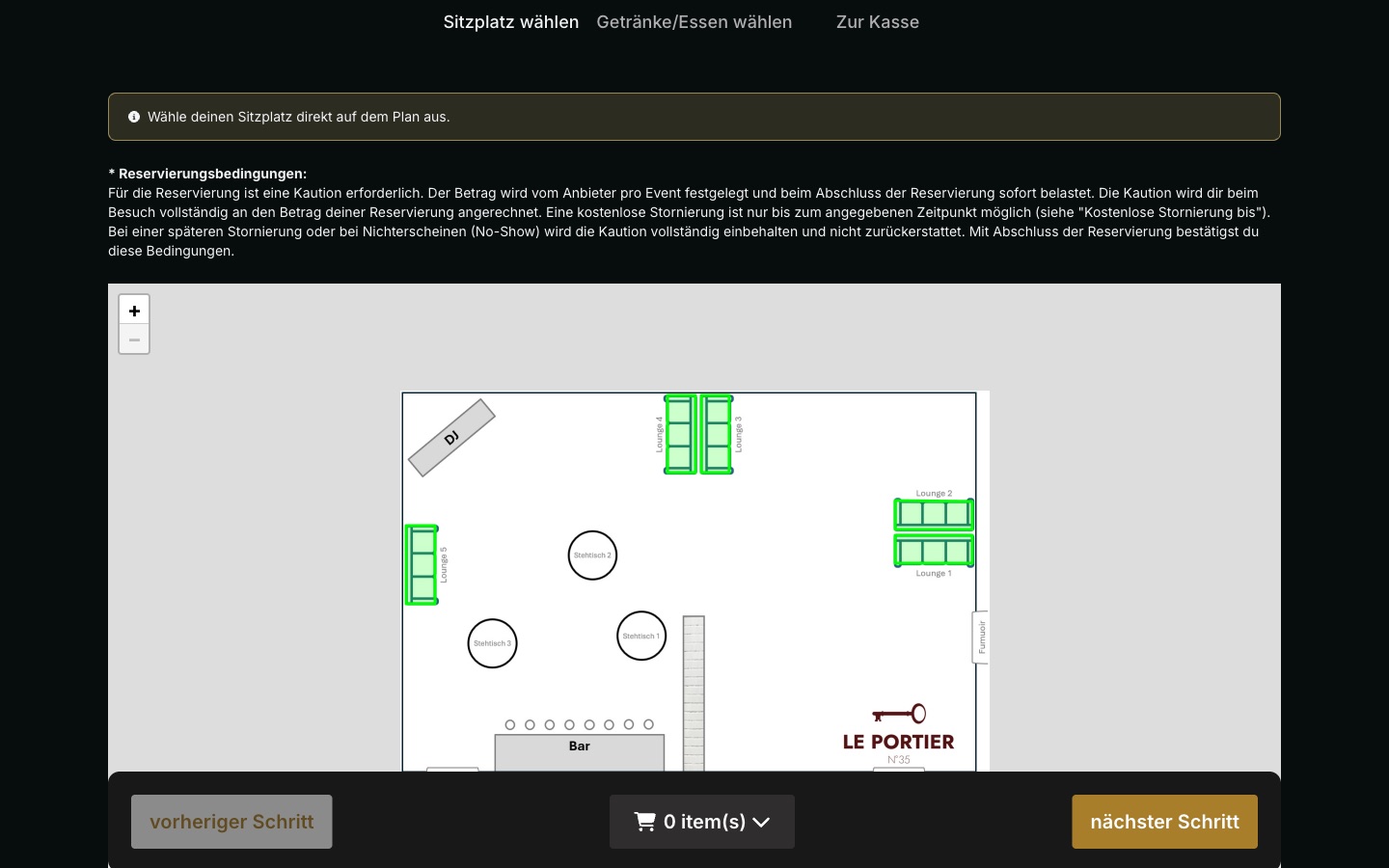
Clubloungery
Booking.com for nightclubs. Guests pick a lounge directly on the floorplan and reserve in a few clicks; club owners draw their own bookable areas.
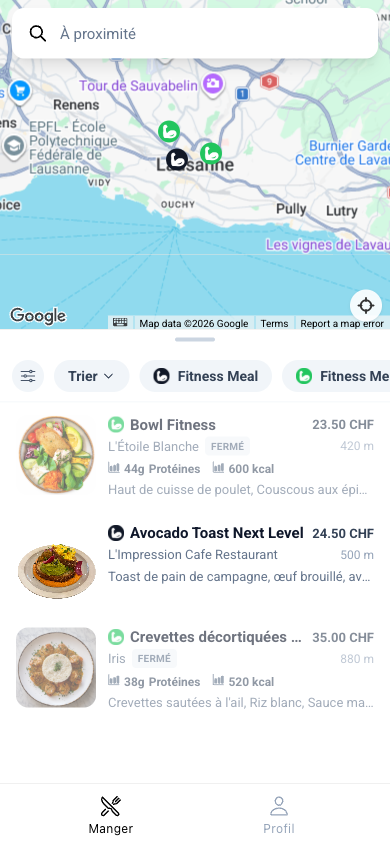
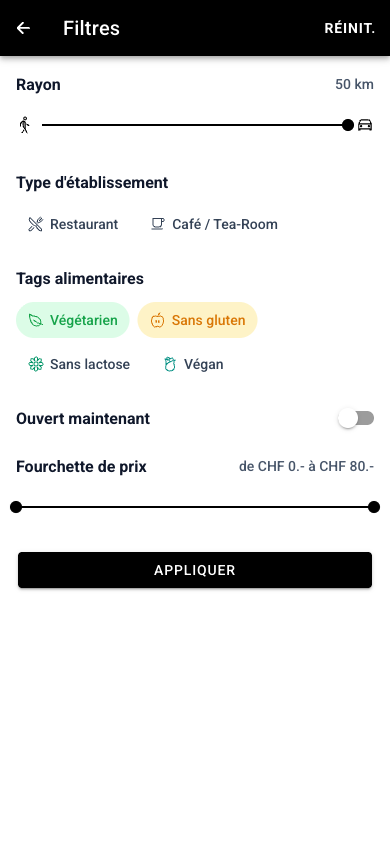
FitFoodies
An app to find healthy food around you: fitness-friendly dishes from nearby restaurants on a live map, filtered by dietary tags and nutrition values.
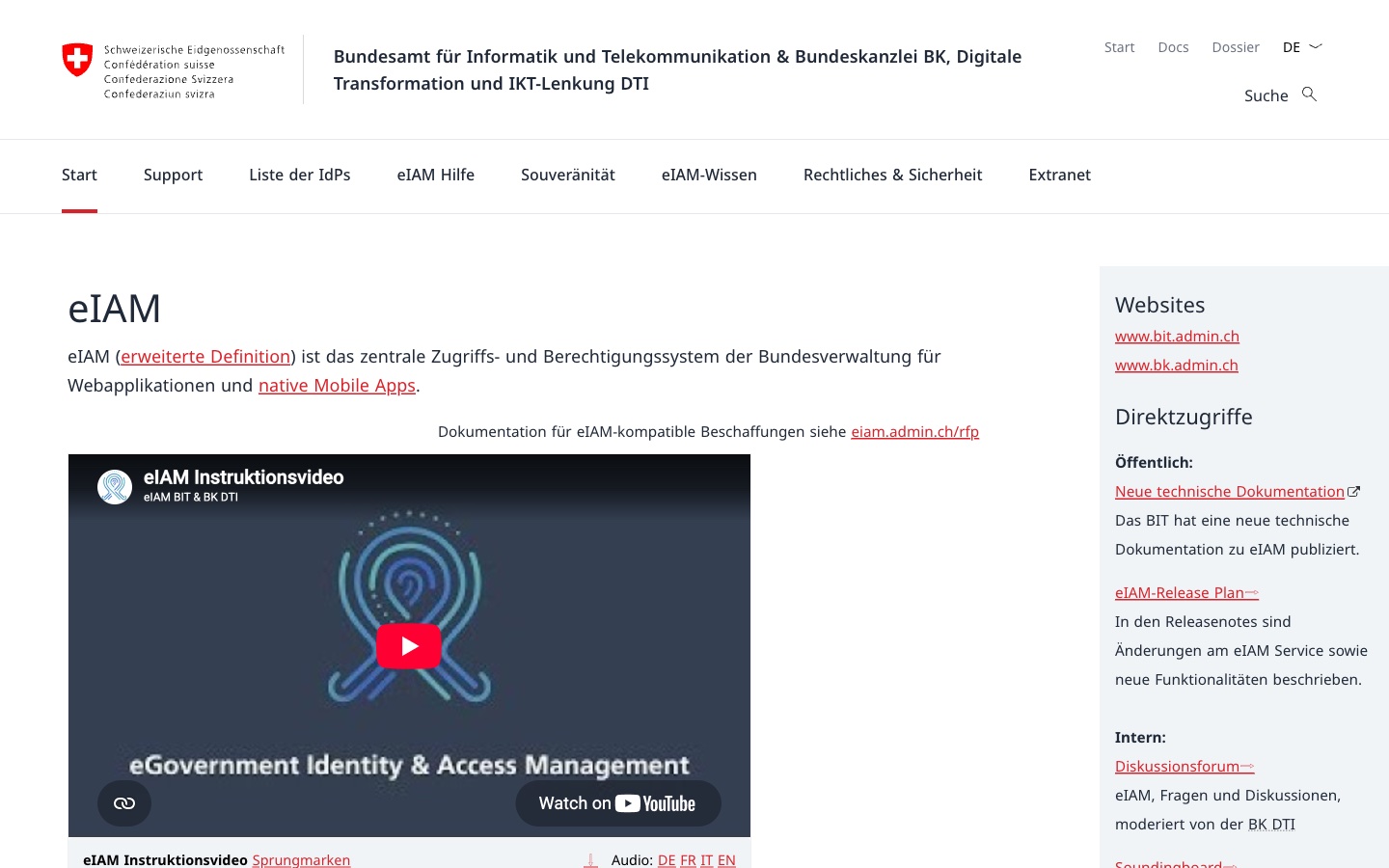
eIAM
The central login of the Swiss federal administration. We replaced the entire front end while the system stayed live, without touching the backend.
Startup work
- Clubloungery, a booking marketplace where guests reserve a lounge on the club floorplan and owners draw their own bookable areas. Deposits, cancellation windows and no-show handling built in.
- FitFoodies, a consumer app that finds healthy dishes nearby on a live map, filtered by diet and nutrition. Startup app development, first screen to store listing.
- Gemina AI, our own developer tool from 2023 to 2024, one of the first AI coding assistants to understand a whole codebase on disk and edit across files. We retired it once agent tools caught up.
Work that has to hold
- eIAM, the central login of the Swiss federal administration. We replaced the whole front end while the system stayed live, rolled out in stages, with the backend untouched.
- Schweizerhof & Partner, DDG Psychothérapie, ICG. Sites for an advisory firm, a psychotherapy practice and an IT consultancy, each built to earn trust before the first call.
- Rescues and rebuilds. When the last developer left and the code is a mystery, we audit, document and take over in stages. The project rescue and legacy modernization pages describe how.
The full write-ups, with screenshots and links, are on the projects page.
Freelancer, first hire, agency or cofounder: the 2026 numbers
Every founder choosing a startup software development company is also weighing a freelancer and a hire. Here's each option with its sourced cost and the thing that goes wrong most often.
| Option | What it costs | Where it fits | The catch |
|---|---|---|---|
| Freelancer | US and Canada $82 to $130 an hour on Arc's vetted network (Arc, May 2026). Upwork lists $20 to $40 entry level and $70 to $150+ expert (Upwork, October 2026). | One defined feature, and someone on your side who can review the work. | Availability. "All moderately good freelancers have other commitments and their regular clients take precedence over one shot clients" (Hacker News, July 2024). |
| First engineering hire | Median US developer wage $135,980 (BLS, May 2025); new engineering hires on Carta averaged $189,000 (Carta, June 2025). Benefits are 30% of employer cost (BLS, June 2026), so $150,000 in salary costs about $214,000 a year. Recruiter fees run 15% to 30% of first-year salary (Dover, August 2026). | A funded company with a technical lead to manage the hire. | 40 to 53 days to fill, 71 for a senior role (Ideaware citing LinkedIn and Ashby, September 2026), and the full cost starts before a line of code. |
| US agency | US firms listed on Clutch average $50 to $99 an hour (Clutch, September 2026); US shops' own published rates run $150 to $250 (Sthenos, October 2026). Founders report fixed MVP quotes of $80,000 (r/SaaS, October 2025). | A funded company with a defined scope and a need for US hours. | The switch: "the senior lead is genuinely impressive, and by the time you realise the team behind them is junior, you're already three sprints in" (r/SaaS, March 2026). |
| Offshore agency | India $25 to $49 an hour on Clutch (September 2026); Southeast Asian agencies $25 to $65 (Fullstack Labs, October 2026); senior rates $31 to $50 across the region, Vietnam at the lower end (Accelerance, 2026). | Price, when you can manage the work yourself. | Time-zone overlap "may be limited for US teams" (Fullstack Labs), and shops that quote the same day without asking a question (r/SideProject, June 2026). |
| Technical cofounder | Paid in equity: 45.9% of two-person founding teams split it equally (Carta, 2024). | The best outcome if you find the right person. | The search. "It feels like a second startup to find this person" (r/startups, November 2025), and cofounder conflict sits behind 65% of high-potential startup failures (Noam Wasserman via Entrepreneur). |
| Deepsel | $3,000 one-week sprint. $4,000 or $8,000 a month per senior engineer. $15,000 a month for a fractional CTO with the build team. | A non-technical founder who wants the price on the page, the code in their own accounts and one senior person answerable for the result. | Engineering is in Hanoi, so meetings happen in the daily US overlap window, and with three senior people there's a waitlist when we're full. |
The part the table can't show is what happens after launch. Buyers whose first paid build reached customers say the trouble started when the builder moved on. That's the case for month-to-month with the same people: we maintain the product for as long as you want us to, and when you hire your own team they inherit a documented codebase in your own accounts. Three more reads before you decide: the fractional CTO cost guide puts a fractional CTO and an agency on one sheet, our note on outsourcing for startups and small businesses covers the offshore trade-offs, and how to choose a software development company has the questions to ask any of us.
Questions founders ask about software development for startups
How much does software development for startups cost?
Vendor price pages put a basic MVP at $15,000 to $40,000 (Appinventiv, October 2026) and a SaaS MVP at $40,000 to $100,000 (DistantJob, October 2026; our SaaS development cost guide has the full table), and founders comparing agency quotes report $35,000 to $150,000. Ours are on this page: a $3,000 sprint, a senior engineer at $4,000 or $8,000 a month, and a fractional CTO with the team at $15,000 a month, so a one- to two-month MVP is $15,000 to $30,000. The MVP development cost guide and the custom software cost guide go line by line.
How long does it take to build a startup MVP?
Published vendor timelines cluster at 8 to 12 weeks (the median claim across 17 articles, per MVP Development, September 2026). Ours is 1 to 2 months for a typical startup MVP. The difference is the written scope, which cuts the build to the flows that win the first paying customers, and that timeline is in the scope document before anyone writes code.
Should a startup hire a freelancer, an agency or an in-house developer?
A freelancer, for one defined feature, when someone on your side can judge the work. An in-house hire once you have a technical lead to manage them and about $214,000 a year to cover a $150,000 salary with benefits. A small firm like ours when you need a product built and nobody technical on your side yet. The comparison table above has the sourced numbers, our guide on how to choose a software development company has the questions to ask, and our list of small software development companies for startups puts 16 firms, ours included, side by side with their Clutch figures.
Do you work with non-technical founders?
Yes. Everything on this page is built for a founder who can't read code and wants to stay in control anyway: a written scope, a clickable version every two weeks, the repository in your own account, a monthly scorecard in plain English. If nobody on your side makes the technical decisions, the fractional CTO retainer puts a named senior person in that seat.
I built a prototype with Lovable, Replit or Cursor. Can you finish it?
Yes. Start with the $3,000 one-week sprint: a full audit, the critical bugs and security holes fixed and shipped, and a scorecard that says what survives and what gets rewritten. You act on it with us or with anyone. Our AI MVP development page lists what a prototype needs before paying users touch it.
Who owns the code, and where does it live?
You do, from the first commit, under a US-jurisdiction agreement with Deepsel Inc., a Delaware company. Repositories and cloud accounts are yours from day one, so leaving is a decision rather than a migration project.
Where is the team, and how do we work together?
Deepsel Inc. is registered in Wilmington, Delaware. The engineering team works from Hanoi, Vietnam, with a daily overlap window on US business hours, and Tim Tran, the founder, leads every engagement. Calls, demos and documents are in English. If you have never run a remote team, our note on communication in outsourcing covers the habits that make it work.
Do you take equity, or build for a share of revenue?
No. Every engagement is paid in cash at the published prices, month to month, with the first 30 days money-back. You keep all of your equity for the cofounder or the round that comes later. The fractional CTO cost guide covers why equity in a fractional deal is usually a bad trade for the founder.
What if I only have an idea and no budget?
Then we're the wrong first step, and we'll say so on the call. Build a first version with an AI tool, put it in front of ten customers, and come back when one of them pays or when a round closes. Or find a technical cofounder who shares the risk. The $3,000 sprint is the smallest thing we sell.