AI proof of concept: how to test an AI idea before you build the full system
An AI proof of concept answers a question that presentations and product demos cannot: will this AI idea work with your data, inside your workflow and at a cost that makes business sense?
The aim is not to build a polished product. It is to test the riskiest assumptions before you commit to a larger budget.


Gives you evidence. It shows:
- What the technology can do
- Where it fails
- What users think
- What it would take to move into an AI pilot program or production deployment
Produces an impressive demonstration without answering whether the idea is useful, safe or economical.
Our clients
Public and private organizations across the United States and Europe, from startups to government agencies.





What is an AI proof of concept?
An AI proof of concept, often shortened to AI PoC, is a small, controlled project that tests whether an AI use case is technically and commercially viable.
It should answer a specific question, such as:
- Can an AI assistant answer customer questions accurately from our internal documents?
- Can a model extract the required fields from our invoices?
- Can we predict late deliveries early enough to act?
- Can an AI agent complete a workflow across our CRM and support system?
- Can the proposed solution save enough time to justify its operating cost?
The output may include
- A working interface
- Model integration
- Evaluation dataset
- Technical architecture
However, those are means to an end.
The real deliverable is a clear recommendation
- Proceed
- Revise the idea
- Stop
Stopping can be a successful result. Discovering that the data is unsuitable, the error rate is unacceptable or an existing product already solves the problem is much cheaper during a proof of concept than after a full build.
AI proof of concept vs prototype, MVP and pilot
These terms are often used as if they mean the same thing. They do not.
| Stage | Main question | Typical environment | Expected outcome |
|---|---|---|---|
| Prototype | What could the experience look like? | Mock or limited data | Feedback on the concept and interface |
| AI proof of concept | Can the essential AI capability work? | Controlled data and limited integrations | Evidence of technical feasibility and likely value |
| MVP | Will customers or employees use the smallest useful product? | Real users and production-quality core features | Usage and market feedback |
| AI pilot program | Does the validated solution work in normal operations? | Live data, real users and selected production workflows | Evidence of adoption, reliability and return on investment |
| Production rollout | Can the system operate safely at the required scale? | Full operational environment | A monitored, supported business system |
An AI proof of concept usually comes before an AI pilot program.
The PoC tests the difficult assumption.
The pilot tests the solution under real operating conditions.
Skipping directly to a pilot may be reasonable when the technology is already well understood and the remaining uncertainty is organizational. Otherwise, it can turn a focused experiment into an expensive software project before feasibility has been established.
Start with an AI readiness assessment
Not every company should begin by building. If the use case, data or ownership is unclear, an AI readiness assessment is the better first step.
The assessment should examine six areas.
A useful AI readiness assessment ends with:
- A prioritized use case
- Known constraints
- Available data
- A proposed experiment
- Build
- Buy
- Stop
-
Business objective
Define the result the business wants, not merely the technology it wants to use.
Not an objective“Add generative AI”
Specific enough to test“Reduce the time agents spend searching policy documents from six minutes to two”
-
Data
Identify where the relevant data lives, who owns it and whether it is complete, current and legally usable.
A customer-service assistant may need
- Product documentation
- Policy pages
- Resolved tickets
A forecasting system may need
- Several years of consistent transaction data
Finding the files is not the same as having usable data.
-
Existing technology
Map the systems the proposed solution must connect to, including:
- Databases
- APIs
- Identity providers
- Document stores
- Business applications
A model that works in isolation may still be unsuitable if it cannot access the required systems securely or return its output to the place where work happens.
-
Governance and risk
Clarify what data may be sent to an external model, which decisions require human approval and what must be logged.
The appropriate controls depend on the use case:
Lower consequencesSummarizing public product information
Higher consequences- Recommending medical treatment
- Approving a financial transaction
-
People and ownership
Name the person responsible for the business result, the subject-matter experts who will judge output quality and the team that will operate the system if it succeeds.
An AI initiative without an operational owner often becomes a demonstration that nobody adopts.
-
Economics
Estimate the value of a successful outcome and the expected cost per transaction, user or completed workflow.
This prevents a technically successful experiment from advancing when its operating costs would exceed the value it creates.
How to choose the right AI use case
The best first use case is narrow enough to test quickly but valuable enough to matter.
Look for a workflow with four characteristics:
- It happens frequently.
- It currently consumes measurable time or money.
- People can judge whether the output is correct.
- A failed result can be reviewed or reversed.
Good candidates include
- Document classification
- Information retrieval
- Support-agent assistance
- Structured data extraction
- Draft generation
- Repetitive workflow automation
Avoid starting with a vague, company-wide assistant.
Its scope becomes difficult to control, and success is almost impossible to measure.
Instead, choose
- One user
- One workflow
- One important result
“Build an AI assistant for the company”
Test whether a support assistant can answer the 30 most common billing questions from the approved knowledge base, with a source for every answer and human review before anything is sent.
That is an experiment a team can build and evaluate.
Software development services
Eight things we do well, for a founder with a product to build, a team that needs more engineers, or a business whose old system has to be replaced.
AI and automation
Assistants, agents and workflow automation connected to your data and tools, tested against real cases before they go live.
Learn more →Custom software development
We design and build the systems a company runs on: internal tools, customer portals, back-office automation and the integrations between them.
Web application development
Browser-based products that load quickly and work for every user, from an internal dashboard to a marketplace that takes bookings and payments.
Mobile app development
iOS and Android apps, native or cross-platform, from the first screen through store submission and the updates after it.
SaaS product development
Multi-tenant products with accounts, billing, roles and usage limits designed in from the start, so the platform holds as customers arrive.
Learn more →MVP development
A first version scoped to what wins early customers, built in short increments and in front of real users within weeks.
Learn more →Legacy modernization
Rebuilding systems that still run the business, in stages and without taking them offline. The Swiss federal login was rebuilt this way.
Learn more →Fractional CTO
Technical leadership for founders without a CTO: architecture, roadmap and hiring decisions, with a team to carry them out.
Learn more →What should an AI proof of concept prove?
A useful PoC should test more than whether a model can produce a convincing answer.
-
Technical feasibility
Can the model handle the required input, access the necessary data and produce an output in the required format?
-
Output quality
Is the result accurate, complete and consistent enough for the proposed use case?
For generative AI, “it looks good” is not an evaluation method.
Build a representative test set and agree on how answers will be scored before development begins.
-
Workflow fit
Does the solution help the people expected to use it, or does it create extra review and data-entry work?
The fastest model in the world provides little value if employees must leave their normal system, copy data between screens and verify every field manually.
-
Business value
Does the result improve a measurable outcome?
Such as- Handling time
- Processing capacity
- Conversion
- Error rate
- Cost per transaction
-
Risk
What happens when the system is wrong?
- Can users identify an uncertain answer?
- Is sensitive information protected?
- Can actions be reviewed and reversed?
-
Ability to scale
The proof of concept does not need every production feature, but it should reveal requirements that would materially change the architecture, budget or timeline.
These may include- Permissions
- Audit logs
- High data volumes
- Response-time limits
- Regional hosting
- Integrations with legacy systems
How to run an AI proof of concept
-
Write the decision first
Begin with the decision the project must support.
This keeps the project focused on evidence rather than features.
For example
If the assistant
- answers at least 85% of the evaluation questions correctly,
- cites the right source
- and reduces average search time by 50%,
we will run a pilot with the support team.
-
Establish a baseline
Measure the current workflow before introducing AI.
Without a baseline, an improvement cannot be demonstrated.
Record- How long it takes
- How much it costs
- How often mistakes occur
- Where users experience friction
-
Prepare representative data
Use a small but realistic sample. Include normal cases, difficult cases and inputs the system should reject.
Do not evaluate only on the examples used while building. Keep a separate test set so the final result reflects how the system handles unfamiliar cases.
-
Select the simplest viable approach
Most businesses do not need to train a foundation model.
Model choice matters, but data quality, integrations and evaluation often have a greater effect on the result.
The first experiment might use- A hosted model
- Retrieval over company documents
- A conventional machine-learning model
- Rules combined with AI
The architecture should fit the question being tested.
-
Build the narrow workflow
Connect only the systems required to test the central assumption. Add a basic interface if real users need one, but avoid spending the PoC budget on visual polish or secondary administration features.
-
Test against agreed criteria
Run the evaluation dataset, capture errors and let intended users try the workflow.
Measure failure patterns, not just the average score.
Ten harmless formatting errors are different from one confident but damaging recommendation. -
Deliver a go, revise or stop recommendation
The final report should include:
Final report- The original hypothesis and success criteria
- The data and architecture used
- Test results and observed failure modes
- User feedback
- Security and governance findings
- Expected production and operating costs
- Recommended next step
- Scope, timeline and estimate for an AI pilot program
At Deepsel, work is delivered in short increments, with a version stakeholders can inspect rather than a progress report they must take on trust.
From the first call to a product in production
Five steps, each with something in writing at the end of it.
-
Discovery call
Thirty minutes on what you are building, who it is for and what already exists. We say what we think, including when the right answer is a smaller build.
-
Scope and estimate
We map users, workflows, integrations and risks, then put the scope, architecture, timeline and estimate in writing. It is yours to keep, whoever builds it.
-
Design
Screens and data model drawn together, so what you approve is what gets built.
-
Build and test
Two-week increments, each ending in a version you can click through. Automated tests, code review and load checks before launch.
-
Launch and support
A staged rollout with a rollback plan, documentation and a handover session. Then we maintain the product, or hand it to your team.
How to measure AI PoC success
Metrics should reflect the business process and the risks of the use case.
-
Quality
- Accuracy
- Precision
- Recall
- Extraction completeness
- Expert score
-
Speed
- Time per request
- Response latency
- Total processing time
-
Efficiency
- Employee minutes saved
- Cases processed
- Cost per completed task
-
Adoption
- Percentage of invited users who use the tool
- Repeat usage
-
Reliability
- Failure rate
- Uptime
- Percentage of outputs requiring correction
-
Safety
- Unsupported answers
- Policy violations
- Sensitive-data exposure
- Unauthorized actions
-
Economics
- Cost per request
- Cost per completed workflow
- Projected payback
-
User experience
- Satisfaction score
- Task completion rate
- Qualitative feedback
The threshold depends on the task.
A drafting assistant may be useful even when every output receives human review.
A system making high-impact decisions needs far stronger evidence and controls.
Examples of AI proof-of-concept projects
-
Internal knowledge assistant
Test whether employees can find accurate answers across approved manuals, policies or technical documents.
Evaluate- Answer accuracy
- Source attribution
- Response time
- Number of searches resolved without escalation
-
Document processing
Extract fields from invoices, contracts, applications or forms. Compare the output with human-reviewed records.
Measure bothAI automation services →- Field-level accuracy
- Time saved
-
Customer-support assistance
Generate suggested answers for agents rather than sending messages automatically.
Measure- Handling time
- Acceptance rate
- Correction rate
- Customer outcomes
-
Workflow agent
Let an AI agent read a request, collect information and prepare an action across selected tools.
Keep final approval with a person during the proof of concept.
AI agent development → -
Forecasting or anomaly detection
Test whether historical data can predict demand, late payments, equipment issues or unusual transactions early enough for someone to respond.
The right use case is not necessarily the most impressive demonstration. It is the one that produces a useful business decision.
Real projects we've shipped
From the Swiss federal login system to consumer apps, marketplaces and company websites: designed, built and run in production by this team.
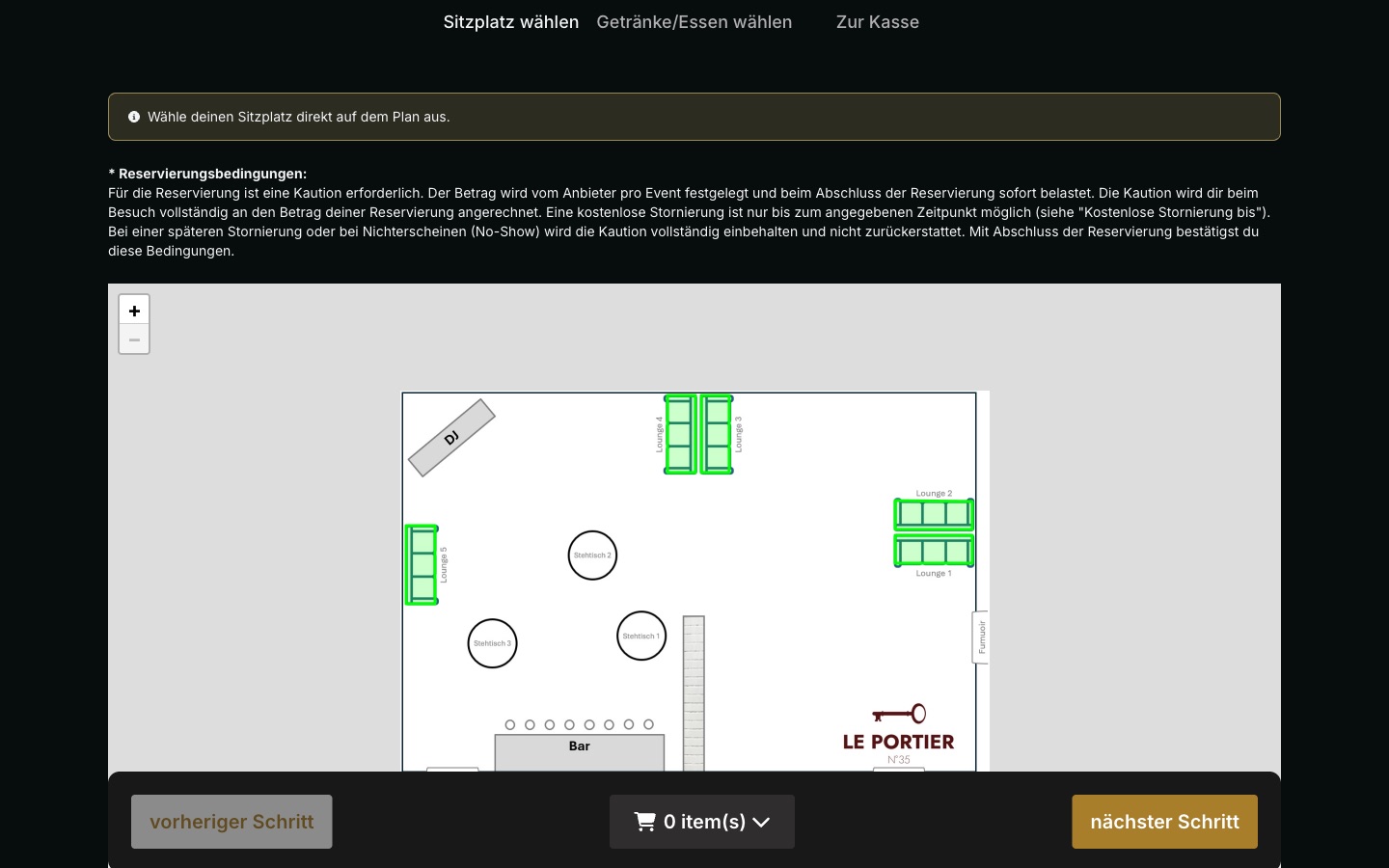
Clubloungery
Booking.com for nightclubs. Guests pick a lounge directly on the floorplan and reserve in a few clicks; club owners draw their own bookable areas.
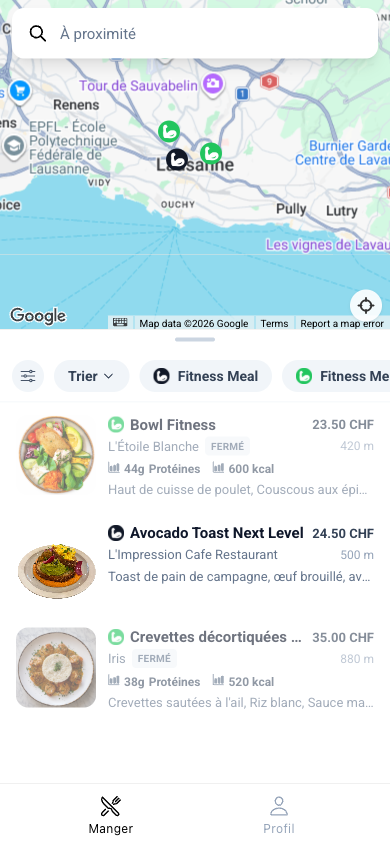
FitFoodies
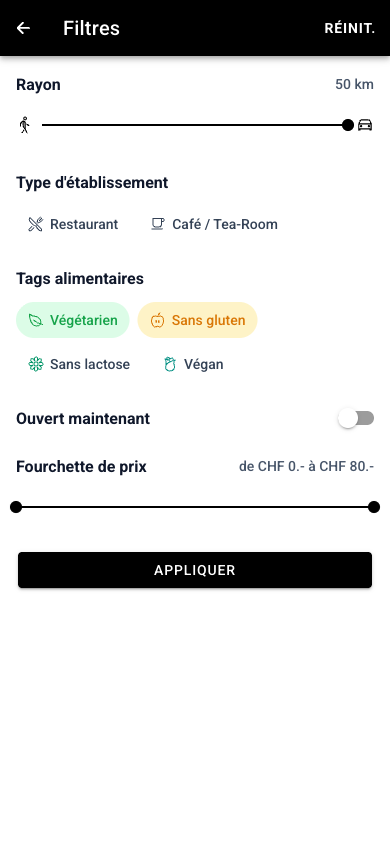
An app to find healthy food around you: fitness-friendly dishes from nearby restaurants on a live map, filtered by dietary tags and nutrition values.
eIAM
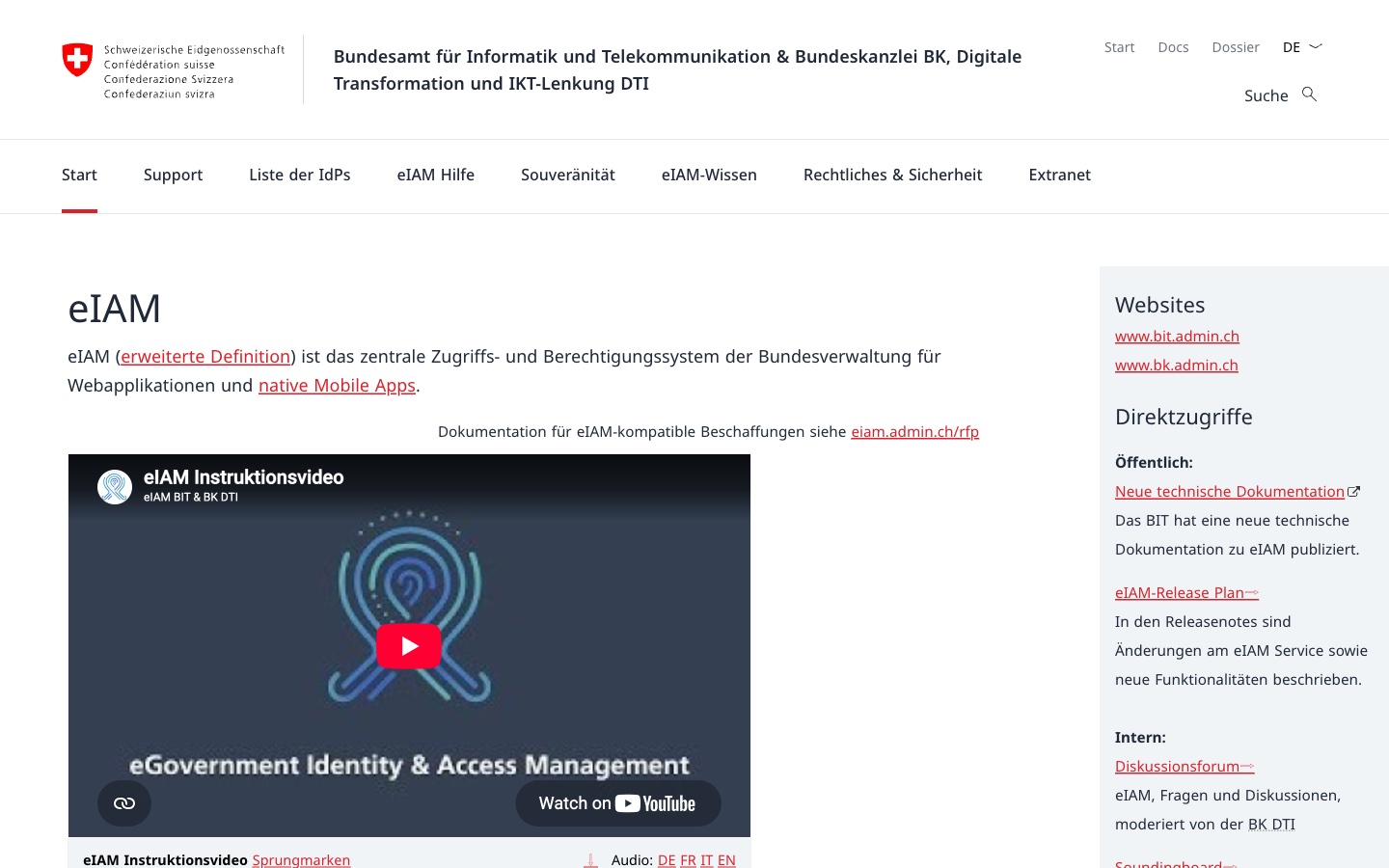
The central login of the Swiss federal administration. We replaced the entire front end while the system stayed live, without touching the backend.
Result: Zero downtime during switchover
Common reasons AI proof-of-concept projects fail
-
The scope is too broad
Trying to cover several departments, data sources and workflows hides the main technical risk.
InsteadReduce the project to one decision or action.
-
Success is defined after the build
When criteria are chosen after seeing the output, almost any demonstration can be called successful.
InsteadAgree on the threshold in advance.
-
The test data is too clean
A model tested only on curated examples will appear more reliable than it is.
InsteadInclude missing information, unusual formats, conflicting documents and adversarial inputs.
-
Nobody measures the current process
Without a baseline, the team cannot show whether the solution saves time, reduces errors or improves an outcome.
InsteadMeasure the current workflow before introducing AI.
-
The demo ignores production constraints
A model may work in a notebook but fail once permissions, latency, auditability, cost and real integrations are added.
InsteadRecord these requirements even when they are outside the PoC scope.
-
A successful PoC becomes production software by accident
Experimental code is often missing monitoring, recovery procedures, security hardening and maintainable architecture.
InsteadTreat the PoC as evidence for the next investment decision, not automatically as the final system.
If experimental code has already become the system your business runs on, software project rescue covers the audit and the repairs.
From AI proof of concept to AI pilot program
A positive result should lead to a controlled pilot, not an immediate company-wide rollout.
A positive result
Introduces
- Real users
- Live or production-like data
- A limited operational scope
This is where the team learns
- Whether the solution is adopted
- Whether quality holds under normal conditions
- Whether operating costs match the original assumptions
When the pilot results justify it
Before the pilot, agree on:
- Which users and workflows are included
- How long the pilot will run
- Who monitors quality and incidents
- Which actions require human approval
- How feedback will be collected
- What triggers rollback or suspension
- What results justify broader deployment
A pilot may reveal that the model is sound but the workflow needs redesign. It may expose missing documentation, inconsistent data or unclear ownership. Those are valuable findings before the system reaches the whole organization.
Why clients choose us
Senior engineers from start to finish
The people on the discovery call are the people who write the code. Nothing is sold by one team and built by another.
Built for production, not for the demo
Every release is tested, monitored and documented before it reaches users. That holds for a first MVP and for a federal login system alike.
Your code, in your accounts
Repositories, cloud accounts and documentation belong to you from the first day. Leaving is a decision, not a migration project.
Small on purpose
A compact senior team and a short client list, so every project gets the founder's attention and nothing waits in a queue.
How much does an AI proof of concept cost?
For early planning, a focused AI proof of concept often falls into these broad market bands:
-
Hosted-model or API testOne workflow, limited data and minimal integration
Planning range: $10,000–$25,000 -
Retrieval or document assistantPrivate data, search, citations and structured evaluation
Planning range: $20,000–$50,000 -
AI agent or custom ML PoCTool use, permissions, workflow logic or model training
Planning range: $30,000–$75,000+
These are planning ranges, not quotes. The same idea can land above or below them depending on the team’s rate, existing infrastructure and what the experiment must prove.
Deepsel’s published rate for one dedicated senior engineer is $8,000 per month, or approximately $50 an hour.
That makes the arithmetic visible:
- One engineer for one month $8,000
- Two engineers for six weeks approximately$24,000
- Model fees
- Cloud infrastructure
- Specialist compliance work
A reliable estimate still needs a written scope.
The biggest cost drivers are usually:
- Data collection, cleaning or labeling
- The number and difficulty of integrations
- Evaluation design and expert review
- Security, privacy and compliance requirements
- Whether users need a working interface
- Custom model development or fine-tuning
- Volume, latency and availability requirements
- Monitoring and support expected after the experiment
Operating costs should be estimated as well. Depending on the solution, these can include:
- Model usage
- Hosting
- Data storage
- Document processing
- Monitoring
- Human review
The least expensive PoC is not always the smallest quote. It is the smallest experiment that gives you enough reliable evidence to make the next decision.
For a closer look at how scope, hours and team rates affect a software estimate, see our custom software development cost guide.
How to choose an AI proof-of-concept partner
Ask potential partners these questions before comparing proposals:
- What exact assumption will the PoC test?
- How will success be measured?
- Which data and integrations are included?
- Who will do the work, and were those people involved in scoping it?
- What is excluded from the estimate?
- How will incorrect or unsafe outputs be evaluated?
- What will we own at the end?
- What would have to change before an AI pilot program or production launch?
- Can the project stop if early evidence shows the idea is not viable?
The proposal should name the assumptions behind its cost and timeline. A precise total with no written assumptions is still a guess.
At Deepsel
- The engineers involved in discovery are the people who build the system.
- The repositories, cloud accounts and documentation belong to the client from the beginning, so a handover does not become a separate migration project.
For a longer checklist that applies to any kind of software project, read how to choose the right software development company.
What our clients say
Three clients on what it was like to work with us.
“We have worked with Deepsel on many projects over the years. Really easy to work with, fast delivery, proactive problem solver that helps advance projects with creative ideas.”

“Tim did an excellent job in building an app to automate multiple workflows for my van rental business monkeyrent.ch. Thanks to him, I save hours of work every day.”

“Tim is incredibly fast and efficient. I won't hesitate to work with him again in the future.”

AI proof of concept FAQ
How long does an AI proof of concept take?
A tightly scoped AI PoC can often be completed in two to eight weeks. Data preparation, custom model development, multiple integrations or compliance requirements can extend the timeline. The project should be time-boxed around a decision rather than allowed to grow into an unplanned product build.
Do we need our own AI model?
Usually not. Many use cases can be tested with an existing model combined with company data, business rules and integrations. Training or fine-tuning a model is justified only when the proof of concept shows that simpler approaches cannot meet the required quality, cost or control.
How much data is needed?
Enough to represent the real task, including common, difficult and invalid cases. The amount varies widely. Document assistants may need a well-maintained knowledge base, while predictive models may require a large history of consistent records.
Can we use sensitive business data?
Possibly, but data handling must be designed before anything is uploaded to a model. Review provider terms, retention settings, access controls, hosting location and regulatory requirements. When necessary, anonymize the data or use a controlled environment.
What happens after a successful PoC?
The next step is normally an AI pilot program with real users and a restricted live workflow. The pilot tests adoption, operational reliability, economics and support requirements before a broader rollout.
What happens if the PoC fails?
Document why it failed. The team may revise the use case, improve the data, select a different approach, buy an existing product or stop. A clear negative result prevents a much larger investment based on an incorrect assumption.